Place:
Náprstkovo muzeum asijských, afrických a amerických kultur
Date:
15/10/2026 06:30:00
Price:
70.00 EUR
Web:
Lecture from the series Bridges Between Worlds: Stories That Connect Us
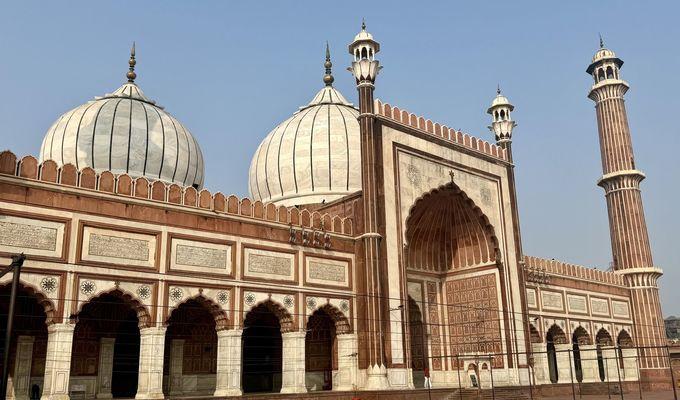
Before India became a colony and was shaped by European powers, there existed an empire that combined Persian elegance with Indian tradition, creating one of the richest and most cultured worlds of its time. From the imperial gardens in Agra to the vibrant courts in Delhi, a space emerged where Islam mingled with Hindu traditions, art with politics, and power with refined beauty.
It was not just an empire of conquests and wars, but also a world of refined culture, poetry, monumental architecture, and sensory elegance. A space where the Taj Mahal was created as a symbol of love, but also an environment full of court intrigues, religious tensions, and constant power struggles. Understanding the Mughal Empire means understanding India at the height of its flourishing – and the moment it begins to transform under the pressure of a new, interconnected world.
What can you look forward to?
• The birth of the empire – how Babur laid the foundations of the Mughal Empire in India.
• Rulers and power – from Akbar to Aurangzeb: tolerance, expansion, and religious tension.
• Architecture and beauty – the Taj Mahal, forts, and gardens as images of power and spirituality.
• The court and everyday life – luxury, poetry, intrigues, and life behind palace walls.
• An empire of wealth – trade, crafts, and India as one of the richest regions in the world.
• Decline and fall – internal conflicts, pressure from Europeans, and the end of the empire in the colonial era.
Lectured by Lukáš Kubín, an orientalist, historian, and passionate traveler who has long been dedicated to popularizing history in a broad cultural context. He studied in Prague, Nagoya, Japan, and at the University of Oxford, specializing in Islamic art and architecture; he also completed study stays at the University of Cambridge. In his lectures, he combines academic expertise with personal travel experiences, gastronomy, questions of identity, and values in today’s rapidly changing world.
CONTINUE READING
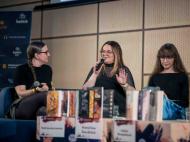
HUMBOOKFEST 2026 WILL BRING MARRISA MEYER, KASIE WEST, AND THE TOP OF THE CZECH YA SCENE TO PRAGUE.
The eleventh edition of the largest Czech book festival for young readers, HumbookFest, will kick off on October 10, 2026, at the O2 Universe in Prague. The organizers are gradually revealing the names of this year's guests, and it is already clear that fans of young adult literature can expect a colorful mix of international stars and local author discoveries. Last year, the festival was attended by over 2,000 visitors, and this year more than fifty authors and guests are expected to participate.
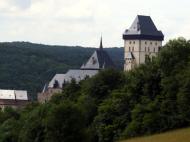
BEYOND PRAGUE: CASTLES AND CHATEAUX WORTH THE JOURNEY
Prague is only the beginning. Beyond the capital, the Czech Republic is filled with hilltop castles, romantic chateaux, magnificent gardens and centuries of stories waiting to be discovered. Some are less than an hour away, others invite you to turn a day trip into a longer journey through the country. From medieval fortresses and royal residences to fairy-tale palaces and hidden treasures, there is an extraordinary variety to explore. So if you have already wandered through Prague Castle and the streets of the Old Town, it might be time to see what lies beyond the city.
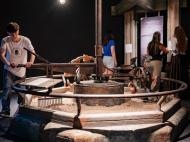
SHERLOCK HOLMES: STEP INTO THE MYSTERY
Forget everything you expect from a traditional exhibition. Here, you don’t simply observe the story – you become part of it. A drop of blood, a barely visible footprint, one tiny detail others might overlook… this is how Sherlock Holmes uncovered the truth. Now it’s your turn to put your powers of observation to the test.
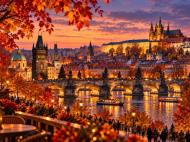
What to do in Prague in autumn 2026: Best events, exhibitions and festivals
Discover the best things to do in Prague in autumn 2026. From major exhibitions, concerts, and design festivals to the Signal Festival, Christmas markets, and seasonal events, explore our selection of cultural highlights worth adding to your Prague itinerary.

The cult classic Lady on the Tracks comes to life at Fidlovačka in a new guise.
The first premiere of this year's theater season at Fidlovačka will be a new adaptation of the cult film musical "The Lady on the Tracks." The new version by Lukáš Pečenka plays with the original material and develops it with love and respect for contemporary audiences: alongside the now-classic melodies, several new songs by Petr Malásek with lyrics by Václav Kopta have been added. "The Lady on the Tracks" invites viewers on a journey (by tram) through the complex yet entertaining fate of a woman.
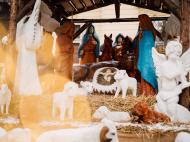
Brno Christmas Markets 2026 – crafts, gastronomy, charity, and light installations
Brno is preparing Christmas and Advent markets again this year, which are among the best in Europe – in 2024, this was confirmed by the award of the title European Capital of Christmas.