Place:
Galerie Rudolfinum
Date:
11/6/2026 - 30/8/2026
Price:
?
Web:
Who controls our data, personal sovereignty, and political freedom? The exhibition offers answers.
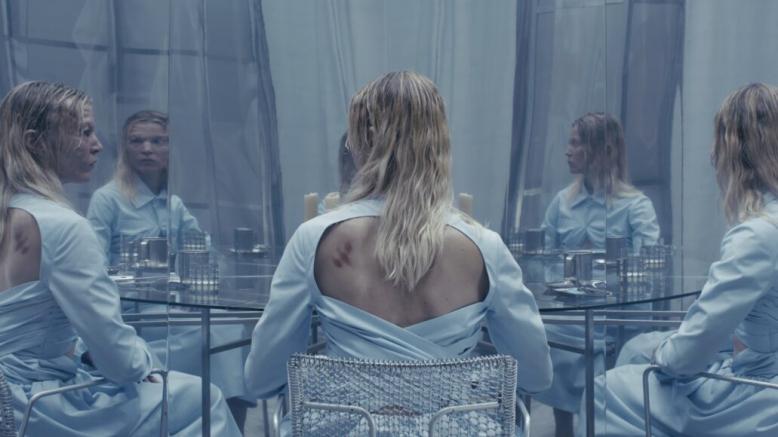
Who controls our data, personal sovereignty, and political freedom? The exhibition DATAS: The Data and the Sovereign offers answers, where Czech and foreign artists explore in their works how computational technologies, automation, and digital infrastructures disrupt both personal and state sovereignty. Roaring lions are no longer a threat to us; today, other creatures lurk: algorithmic systems, data infrastructures, and forms of governance driven by artificial intelligence that operate beyond the reach of effective democratic control. This group exhibition heralds one of the most important struggles we will face in the coming decades: the fight for our own sovereignty in an age when data and computational technologies increasingly escape legal and political control and fundamentally reshape the freedom of human action. Algorithmic systems influence public debate, automate and manipulate decision-making, and dictate the nature of war – software code rewrites the foundations of democracy. The exhibition brings together voices from the fields of art, philosophy, and technology and examines how personal and national self-determination can survive in the face of the forces of surveillance capitalism and authoritarianism. The collection of represented works includes a wide range of forms: from interactive installations to narrative films to software art. The works not only serve as criticism but also model ethical alternatives to the digital regimes that exploit us. The exhibition is divided into three thematic constellations. The section Shadows of Leviathan addresses data as sovereign power and explores algocracy, cybersecurity, and automated governance. Another, Islands of Disobedience, focuses on various forms of infrastructure – energy grids, underwater cables, and data centers – and shows sovereignty as a form of logistical and computational power with ecological consequences. The final part of the exhibition, Songs of Refusal, turns attention to the subject and examines the fragility of personal autonomy under conditions of profiling, prediction, and surveillance, where the image becomes a functional element of control systems. – Lívia Nolasco-Rózsás, curator of the exhibition. The exhibition was created with the support of the European Union's Creative Europe program as part of the project DATAS: The Data and the Sovereign (2025–26), which serves as a platform for artists from Central and Eastern Europe, the South Caucasus, and other regions to jointly explore how computational technologies transform political power and personal self-determination. An accompanying publication of the same name is being released for the exhibition. Curator: Lívia Nolasco-Rózsás
CONTINUE READING

The Harry Potter: The Exhibition world exhibition is heading to PVA EXPO Prague Letňany. It will showcase original costumes and props from the filming.
One of the most successful traveling exhibitions of our time is heading to Prague. Harry Potter™: The Exhibition will open its doors on August 6, 2026, at the PVA EXPO Prague Letňany and will offer visitors a unique opportunity to enter the stories that have captured the hearts of fans around the world. The interactive exhibition, which has already attracted more than four million people, will showcase authentic costumes, original props, and unforgettable settings inspired by both the Harry Potter™ film series and the Fantastic Beasts™ films, as well as the play Harry Potter and the Cursed Child.

ROCK MOTOL FEST 2026: at the end of summer, you will enjoy a great program!
The capital will once again shake to its foundations at the end of summer. The popular open-air festival ROCK MOTOL FEST announces its return and has prepared a significant innovation for its third edition. Originally a one-day event, it is transforming into a full-fledged two-day festival marathon filled with guitar riffs, thundering basses, and the purest rock-metal energy. On September 11 and 12, 2026, the unique natural area of the former Motol campsite in Prague 5 will come alive, where the renowned restaurant Železná Panna is currently located. This space offers the ideal combination of great accessibility within the capital and an authentic, relaxed festival atmosphere in the open air.
HARRY POTTER: THE EXHIBITION
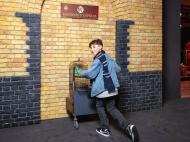
Harry Potter: The Exhibition is a groundbreaking touring experience celebrating the magic of the Wizarding World. Featuring immersive storytelling, cutting-edge interactive technology, authentic props, and original costumes, the exhibition brings to life some of the most beloved moments, characters, and locations from the Harry Potter™ and Fantastic Beasts™ film series, as well as the stage production Harry Potter and the Cursed Child.

HOT DUCK: DUCK, PORK BELLY, DUMPLING. MADE BY HAND. EATEN WITH JOY.
Forget ordinary tourist spots. If you’re looking for an authentic food experience beyond the usual tourist trail, head to Teplá Kačka.

THE NATIONAL TECHNICAL MUSEUM
The National Technical Museum in Prague is the largest institution in the Czech Republic dedicated to the history of technology, science, and industry. Located in the Letná district, it offers a modern museum experience with a wide range of permanent exhibitions covering transportation, architecture, astronomy, photography, chemistry, engineering, and everyday technology.

Escape from the City: Discover the Magic of Silence in the Czech Forest
Stop. Exchange the city noise for an area of absolute peace. The Czech forest, stretching along the Bavarian border, is a forgotten paradise that captivates the weary mind. It offers the rarest commodity of today: deep woods, distant views, and above all, empty roads without crowds.