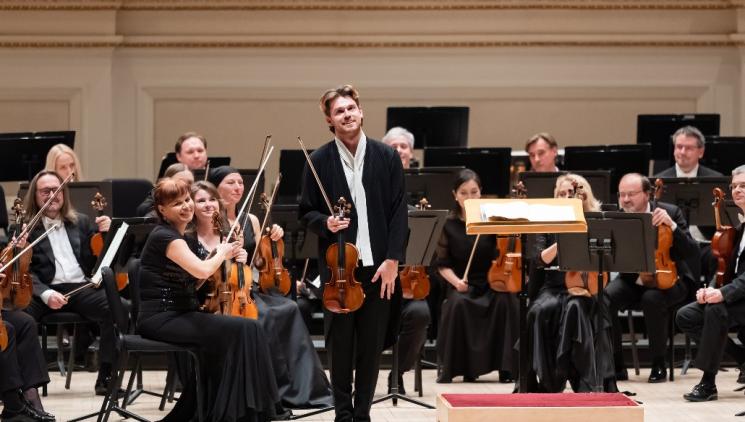

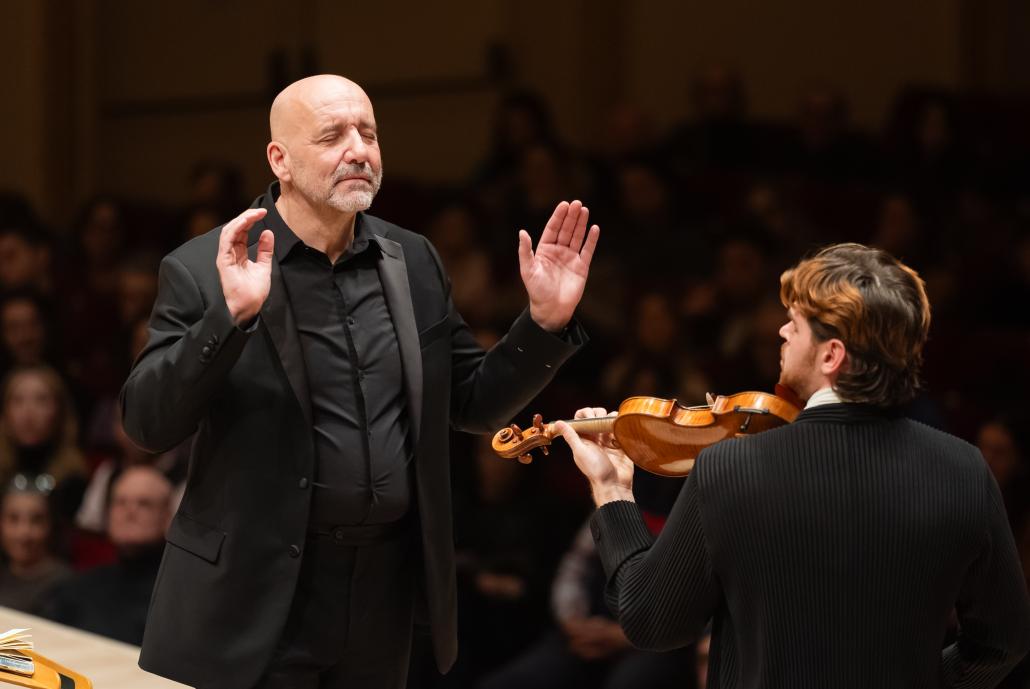
Emmanuel Villaume, Blake Pouliot, and the Prague Philharmonia completed a joint American tour this January, culminating in a concert at New York's Carnegie Hall. This transatlantic connection will also be reflected in the programming of the opening night.
The concert will open with Sinfonietta La Jolla for chamber orchestra and piano, H 328 by Bohuslav Martinů. The composer wrote it in New York during his stay in the United States, when he could no longer count on returning to his homeland. This will be followed by the Violin Concerto, Op. 14 by Samuel Barber, which was partly composed in Europe. Work on it was interrupted by the outbreak of World War II, and Barber completed it after returning to the USA.
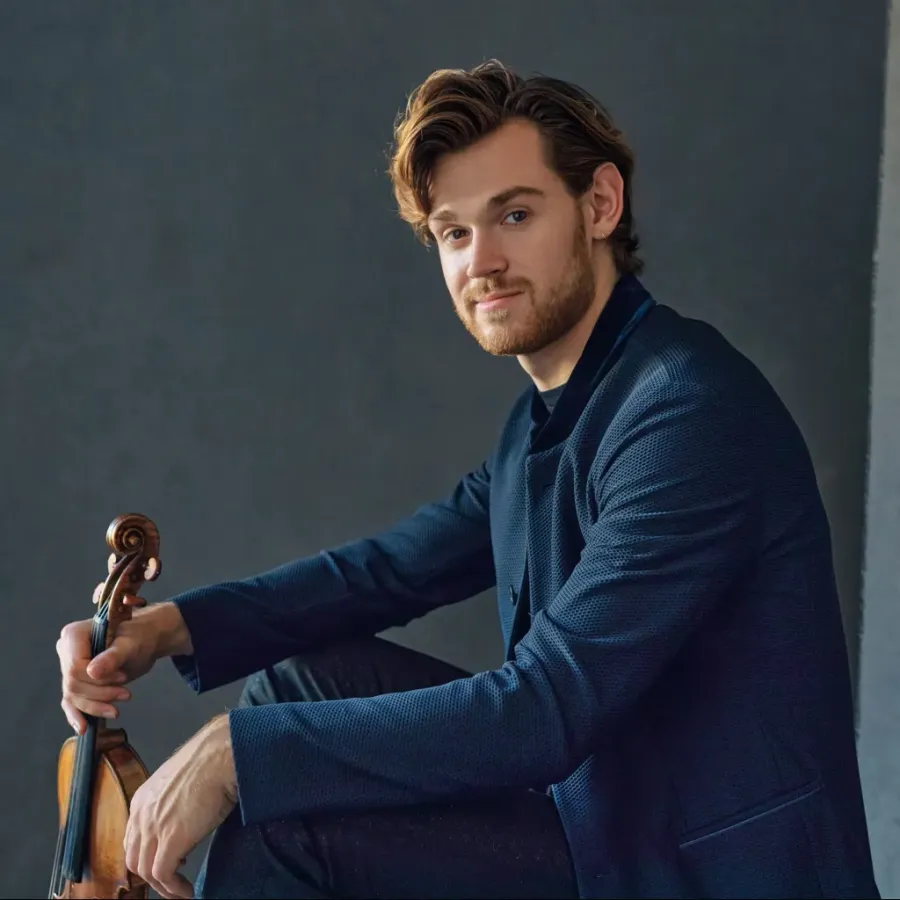
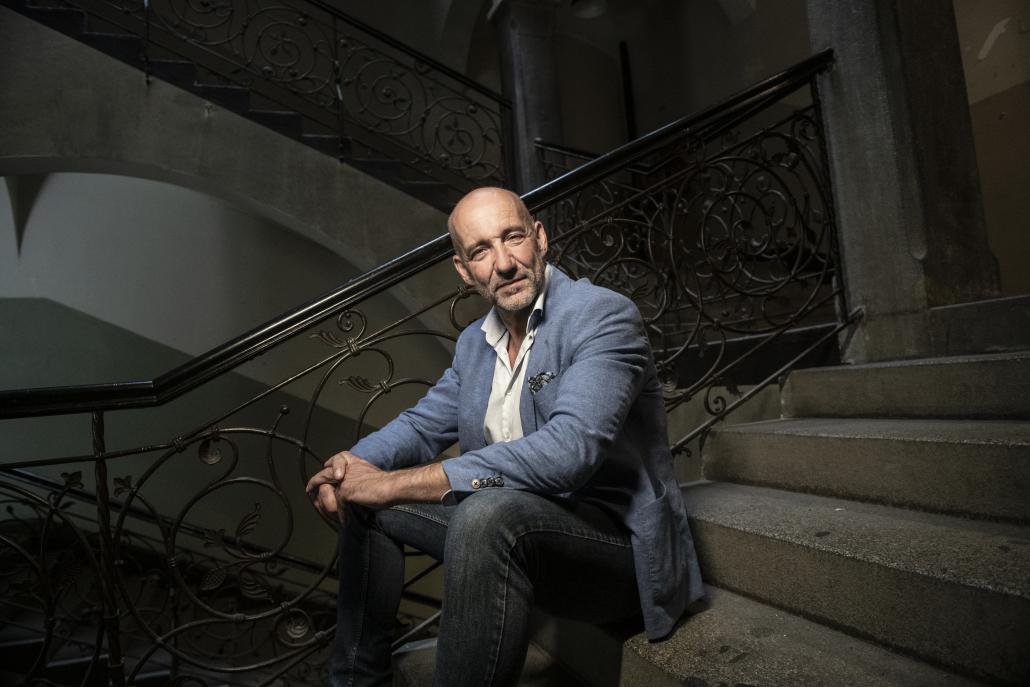
„We are entering the 33rd season of the Prague Philharmonia, which will offer original and contrasting programming and bring star artists as well as emerging talents to the stage. Its opening concert will connect Europe and America – a theme that is close to me as well, as my life has been linked to both continents for many years. I am very much looking forward to reuniting with Blake Pouliot and to exploring our own interpretative approach to Barber's Violin Concerto together,“ says Emmanuel Villaume, the music director and chief conductor of the Prague Philharmonia.
Pouliot, whom the Toronto Star described as „one of those exceptional talents that come along once in a lifetime,“ repeatedly returns to Barber's concerto as a performer. Yet he still finds new challenges within it: „Barber's concerto is a significant contribution to the violin repertoire of the twentieth century and can be a great gateway to classical music for many listeners. For the performer, however, it is somewhat 'counterintuitive'. The simpler sections with beautiful melodies seem more difficult to me than the virtuosic finale. And although I have played this concerto many times, I sometimes question my interpretation and ask myself how far my curiosity can go without harming the whole,“ says Blake Pouliot.
The concert will culminate with one of the most iconic works in the entire symphonic repertoire, Symphony No. 5 in C minor, Op. 67 by Ludwig van Beethoven. Over the years, this symphony has become a bearer of ideas associated with victory and fate. During World War II, its characteristic opening motif, whose rhythm corresponds to the letter V in Morse code, was used in the "V for Victory" campaign and thus became a kind of musical symbol of hope and determination for the Allies. Here, too, an unassuming musical connection with Martinů arises, as he quoted Beethoven's motif in 1943 during his stay in the United States in the Memorial to Lidice, his personal musical tribute to the victims of the brutal Nazi extermination of this Czech village. In light of these historical events and their impact on the lives of Barber and Martinů, one can hardly imagine a more fitting conclusion to the concert than Beethoven's monumental Fate Symphony.
The concert will take place under the patronage of the Canadian Ambassador to the Czech Republic, Emily McLaughlin.