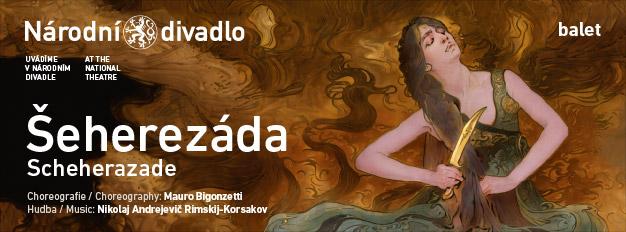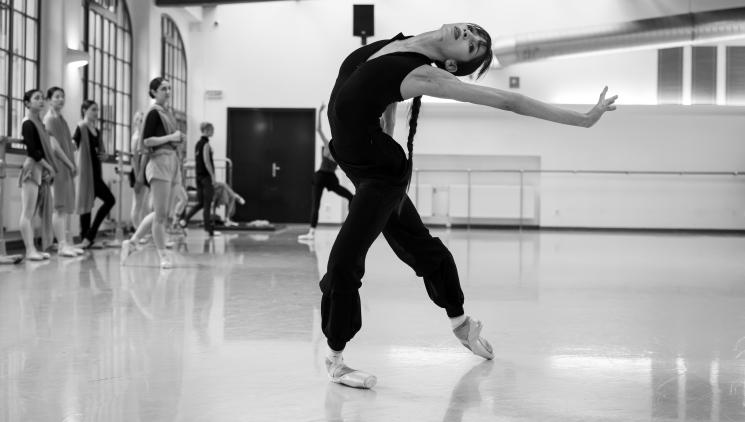

“We are delighted to once again present Scheherazade on the boards of the National Theatre after fifty years. The last time it was staged here was by Jiří Němeček. This year, we also commemorate one hundred years since its Czech premiere in the choreography of Remislav Remilavský. This timeless story of courage, beauty, and the power of storytelling is a fusion of tradition and innovation that will surely delight the audience of the National Theatre,” says the general director of the National Theatre, Jan Burian.
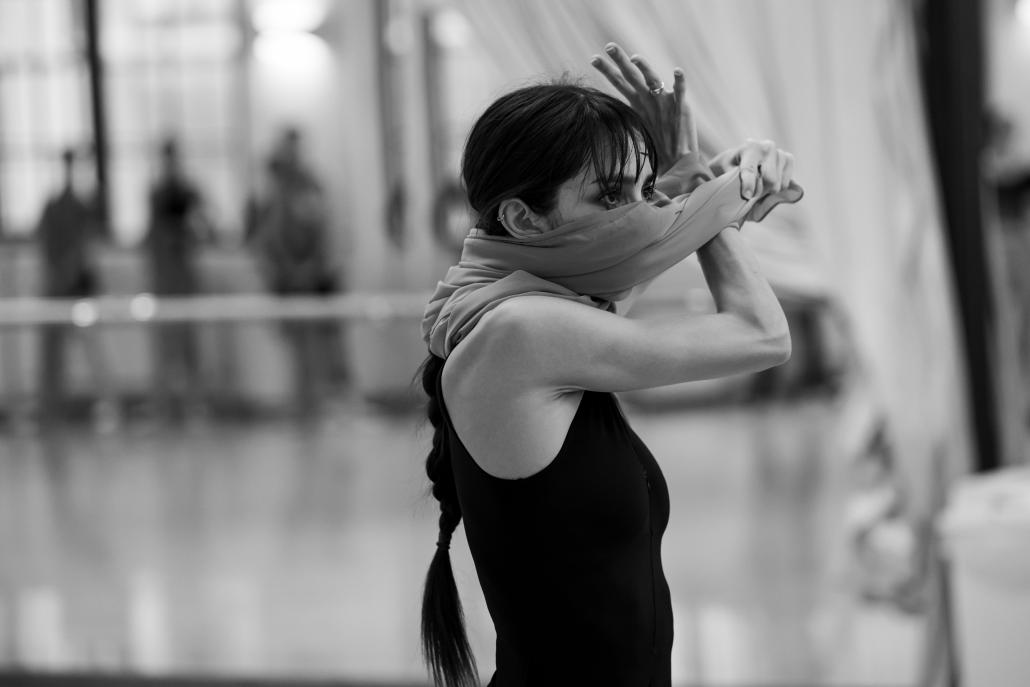 Photo: Serghei Gherciu
Scheherazade is not only a timeless story of courage and wit but also a powerful reflection of the struggles that women face today. Inspired by the bravery of women around the world who confront oppression, we connect the iconic story of Scheherazade – a woman who defied fate with her intelligence and perseverance – with the contemporary fight for women's rights. In this interpretation, the ballet transcends its artistic roots and becomes a profound expression of freedom, equality, and the significance of the struggle for basic human rights. (Filip Barankiewicz, artistic director)
The Truthfulness of Mauro Bigonzetti
To deceive with the body, they say. In the real world, but especially in the theatrical one. After all, artists on stage are masters of deception. And that includes ballet dancers. We create the illusion of lightness in our movements, in jumps and in endurance, we appear as if we are nothing. We die in mortal convulsions, you believe in our pain and outbursts of love – and that is only thanks to the body, which often pretends.
But then there are those who speak the truth with their bodies. They do not deceive. They are more truthful than the story itself, more believable than the truth. And Mauro Bigonzetti belongs to them. The Italian choreographer is known for his distinctive and innovative style, which often combines elements of classical ballet with modern dance. Why? Bigonzetti works with the bodily expressiveness, the energy of the dancers. He alternates dynamics; his choreography is fluid, it flows – and then, in contrast, in a burst of expression, it captures the audience's emotions, working with the experience of all bodies – both dancers and spectators. All our emotional experiences are inscribed in the language of the body. This experience is universal; our physicality cannot lie. And Bigonzetti knows this. In the depth of his messages, musicality is a great ally for him; he engages in a true dialogue with music. And there is also his supreme aesthetics, an Apollonian refined taste. A sense of beauty. The eyes feast, and the soul sings. Bigonzetti can also dress old stories and ancient archetypes in contemporary clothing, today’s vision and perception of the world. This makes his works true confessions, something we intrinsically know, that surrounds us, and to which we can then – easily believe…
The story of the exotic ballet Scheherazade in his interpretation is timeless, even though it takes place in the ancient Orient. We understand it, just as we understand the ever-present confrontation of submissive femininity with stereotypical masculine masculinity, violence rooted in the human genome, the need to control and manipulate… but also to love. And that will be Bigonzetti's Scheherazade, with the beautiful music of Rimsky-Korsakov.
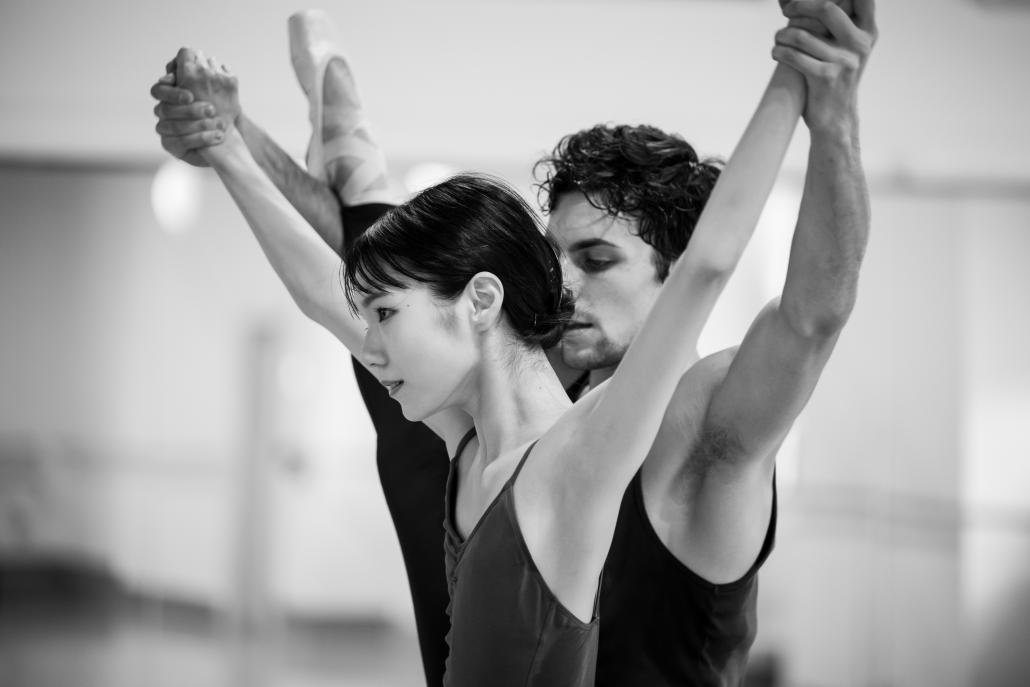 Photo: Serghei Gherciu
Mauro Bigonzetti, the long-time artistic director of Aterballetto, is one of the innovators of modern dance, part of the elite of choreographers worldwide, and a sensitive personality, a great storyteller. With a unique movement language that straddles contemporary and classical dance, he reveals the beauty of the body almost like a sculptor. However, his works are in no way academic. He has collaborated with the National Theatre Ballet three times already. In Prague, his Vertigo was presented, and in the 2023/2024 season, he participated in the world premiere of the project Holo Harmonies, for which he created choreography for Schubert's Death and the Maiden. There was also great interest in the presentation of his full-length ballet Kafka: The Trial at the Estates Theatre (premiere 2019).
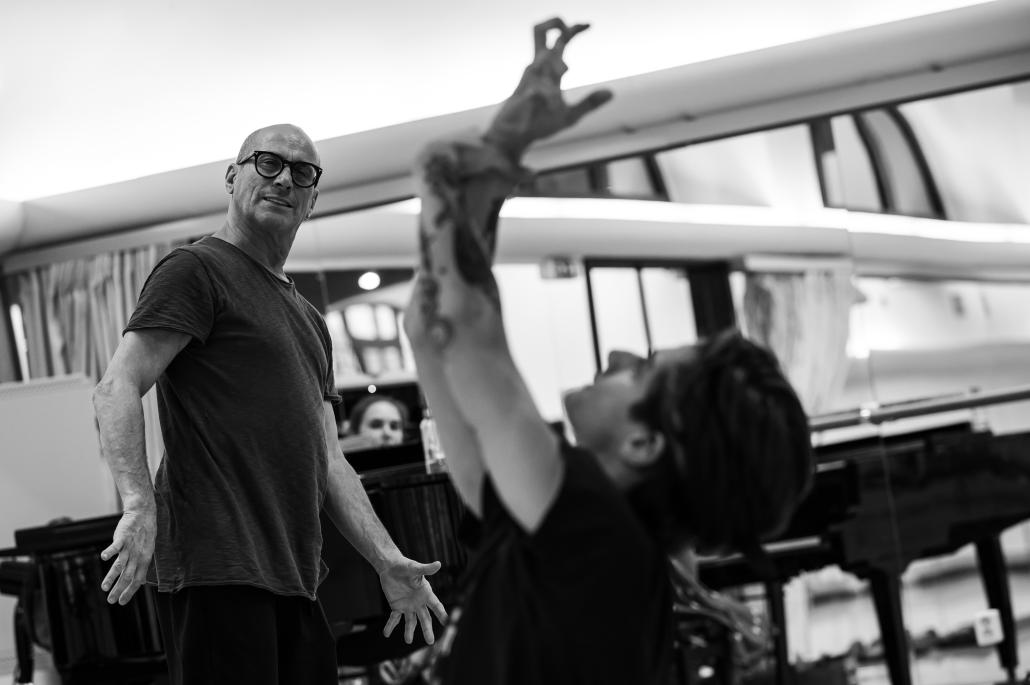 Photo: Serghei Gherciu
The symphonic suite Scheherazade by Nikolai Rimsky-Korsakov was not created with the idea of a dance interpretation. Its author fully demonstrated his extraordinary talent for refined, rich orchestration here and, inspired by his travels in the East, created a work of extraordinary sonority, overflowing with beautiful, melancholic melodic lines and dramatic impulses. The ballet was staged for the first time by Mikhail Fokine – in the scenic design of Léon Bakst – and this production became a sensation of the 1910 season at Les Ballets Russes, thus marking this title in the world cultural heritage, repeatedly staged on stages worldwide. It was also one of the first slightly erotic ballets, rooted in sensuality and physical beauty. And it is evident that the aesthetic refinement of Mauro Bigonzetti's art will give us the opportunity to fully experience this extraordinary fragrance of the possibilities of theatrical magic.
Scheherazade
Choreography: Mauro Bigonzetti
Music: Nikolai Andreyevich Rimsky-Korsakov
Scenery and lights: Carlo Cerri
Costumes: Anna Biagiotti
Video: Carlo Cerri, OOOPStudio
Dramaturgy: Patrizia Dall’Argine
Musical preparation: Johannes Witt
Conductor: Johannes Witt / Václav Zahradník
Orchestra of the National Theatre
World premiere: November 28, 2024, at the National Theatre