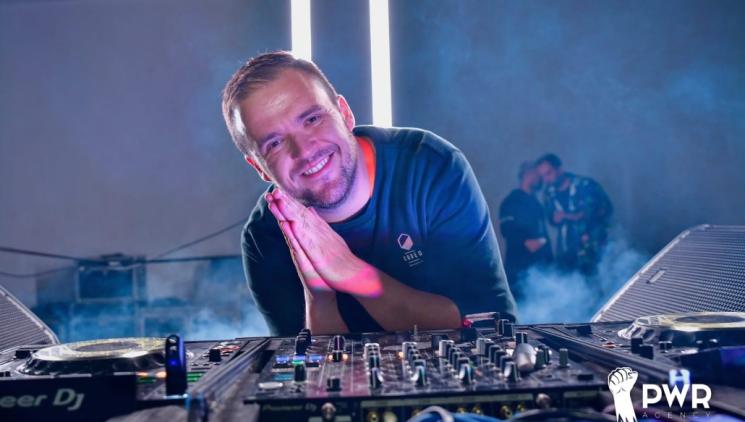


His deep know-how was also drawn directly in the field as a music journalist. He traveled to the most significant world festivals such as Tomorrowland, Ultra Music Festival in Miami and Europe, Dance Valley, or Mysteryland, from where he wrote reports for legendary sites like techno.cz, poslouchej.net, or for Dance Radio. For 13 years, he has been successfully building the leading music portal housemagazine.cz, and for the last 5 years, he has been at the helm of an ambitious music label. In an open interview, Jiří elaborated on the philosophy of the housemagazine.cz records label, the flexibility of genres, the future with AI, and what is currently lacking for emerging talents to succeed.
As the head of housemagazine.cz records, you lead the largest Czech label in electronic dance music, which is definitely not to be overlooked on the scene. How would you describe your current philosophy, and how do you differ the most from established competitors?
Our main philosophy is to maximally help domestic producers to go as far as possible in their music careers – ideally to a global level. In the Czech Republic, there is still a lack of a producer star who would become a global name and regularly perform at the largest world festivals. And that is exactly what we want to change with housemagazine.cz records.
We strive to assist our artists in all phases. We want them to avoid unnecessary mistakes when releasing a single, mistakes that many emerging producers made in the past. Therefore, we provide them with comprehensive marketing and executive support. This includes not only a unique email database of foreign contacts and support in radio stations, but we also ensure the placement of singles in playlists on streaming platforms, prepare custom graphics, and handle promotion on social networks.
Most domestic labels – and I don't want to offend anyone – operate in such a way that they simply release a single, share a post on social media, and that's it for them. We approach music and artists very personally. We are well aware that behind every track lies dozens of hours of hard work in the studio, and no one wants that effort to go to waste.
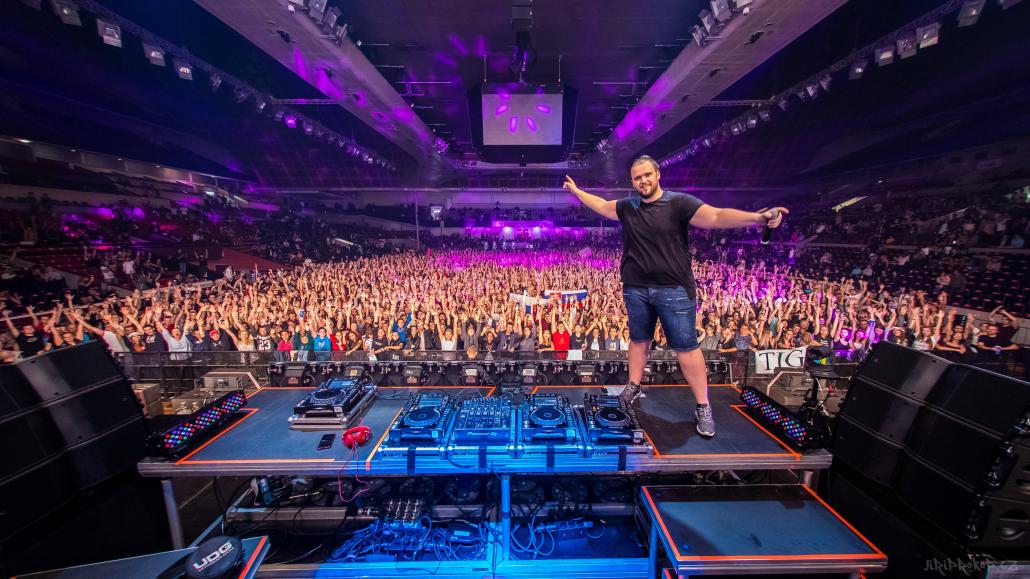
Electronic music is evolving incredibly quickly, from house to techno to harder sub-genres like hardstyle. What criteria do you use to select tracks and artists that you will release? Do you have any strict genre boundaries, or do you rely on flexibility?
Our label has been conceived as multi-genre from the very beginning. This is quite a unique thing in the Czech scene. Most expert guides on the music business will tell you that this is wrong and that labels should build a narrow listening core and stick to one specific style. However, the Czech Republic is a specific and relatively small pond where strict focus on one genre would unnecessarily limit us. Moreover, we in the team enjoy all branches of electronic dance music. It would simply be a shame to confine ourselves to just one box and miss out on great tracks from other genres.
There is a lot of talk about the involvement of artificial intelligence (AI) in the creative industry. You yourself do not hide the fact that you actively use AI. How specifically does AI help you in managing the label and in the music business in general?
I use artificial intelligence on a daily basis. From a managerial perspective of label management, AI helps me tremendously with administration – whether it's writing emails, organizing spreadsheets, creating texts, or generating supplementary images. It is a great tool that can save an enormous amount of time. Of course, it is necessary to take it only as an assistant and not expect it to do all the work for you. The final human touch, feeling, and emotion must always be present in the end result, no matter what you do.

As a music producer, I have also tried AI directly in the creative process. Again, I think it’s not right to let it generate an entire single with one click – although I have tried such experiments. However, it works great as an assistant to facilitate technical work, for example, in vocal editing, separating individual sound tracks (stems), or mastering. Oh, and I am probably the first Czech DJ to have a music video for my track completely produced through AI video. By that, I mean a coherent story that the video carries.
Some people in the music industry are afraid of AI, while you see it as an opportunity. Where do you think the line lies between AI helping with execution, marketing, or distribution, and where must the human factor and emotions still remain?
The line lies in authenticity. When you type a sentence into AI like, “Make me a techno track,” and in two minutes you upload it to Spotify without any personal invention claiming how great a single you composed, that is obviously wrong.
On the other hand, I know, for example, a talented lyricist who writes great lyrics, but as a solo author, he does not have the means to pay for a whole live band (in his case, it’s rock and metal lyrics) and rent an expensive studio to realize his ideas. Therefore, he helps himself by having the musical background produced with the help of AI, and then he places the resulting tracks on platforms like Spotify. I consider that completely legitimate and okay, as long as it is communicated fairly and openly that the lyrics are human and the musical component was created using AI.
You mentioned that behind every single lies a huge amount of work and that you strive for maximum marketing support. How exactly does the process work at housemagazine.cz records from the moment a producer sends you their demo to the actual release on platforms like Spotify or Apple Music?
The entire process begins with a phase known in the music business as A&R (Artists and Repertoire) – that is, searching for and selecting talents. When we receive a demo recording, the team carefully listens to it. If the track has potential, we contact the author and fine-tune any details. Subsequently, we take care of the legal side of things, which is the foundation of every professional label. We sign standard licensing agreements with artists that clearly define rights and fair distribution of revenues from sales and streaming. Once we have everything signed, our marketing round comes into play – planning campaigns, placing into distribution networks for global platforms, creating visuals, and reaching out to radio stations and foreign DJs.
For many young producers, it is a dream to release music under an official brand. What would you recommend to starting Czech producers who want to send their demo to housemagazine.cz records? What should they pay attention to and how can they best catch your interest?
The most important thing is originality and the technical quality of the recording. There’s no point in trying to copy current world hits one to one. We are looking for people who have their own handwriting, regardless of whether they make melodic house, hard techno, or energetic hardstyle. Technically, the recording should be clean, ideally already with a well-solved mix. The second thing is a professional approach – when a producer sends us a demo, they should write a few sentences about themselves, send the track via a private link (for example, SoundCloud or Dropbox), and show that they mean business. We at housemagazine.cz records want to build long-term partnerships, not just mindlessly churn out dozens of releases monthly.
The housemagazine.cz brand has a huge tradition in the Czech dance scene, originally as a leading music medium and now also as a successful label. How do these two worlds – the magazine and the music label – complement each other?
It is a huge synergistic advantage that very few labels have in our regions. Thanks to our strong background in the form of the music server housemagazine.cz, we have direct access to a community of fans who live electronic dance music. We can immediately ensure publicity for our releases through articles, exclusive interviews, and other content. This interconnectedness gives the label enormous strength at the moment a single is released. We know exactly how to deliver the information to the right people, and we do so very effectively and organically.
Looking ahead, what are the immediate goals and plans for housemagazine.cz records? Where do you personally want to move as the head of the label in the coming years?
We want to continuously expand our catalog with quality music and break through even more strongly in the international market. The goal is for the housemagazine.cz records brand to be perceived as a seal of quality not only here but also abroad. We want our tracks to be regularly played by world DJs in their sets and to appear in the biggest playlists on Spotify, Apple Music, or Beatport. We also plan to connect digital releases more with club events and festivals to give our producers a chance to present their work live to an audience. The future is about innovation, speed, and precise digital marketing – and we intend to be at the forefront of that.
If any talented producer reading this has a finished track in their drawer and would like to release it under your wings, or if someone simply wants to reach out with a collaboration offer – what is the best procedure? Where should people turn, and should they be afraid to write to you?
No one needs to be afraid to write to us; we are here for that. If you have a finished track that you have worked hard on, or you have an interesting idea for collaboration, the best way is to visit our website housemagazinerecords.com. You will find all the contacts and instructions on how to properly send us your recording.
At the same time, we have prepared a really extensive FAQ section on the pages where both beginner and advanced producers can find answers to most of their questions – from the format in which to send a demo to how our approval process and subsequent promo works. So if you want to take your music to the next level, check out our website and get in touch with us. You won't lose anything; on the contrary, you can only gain.