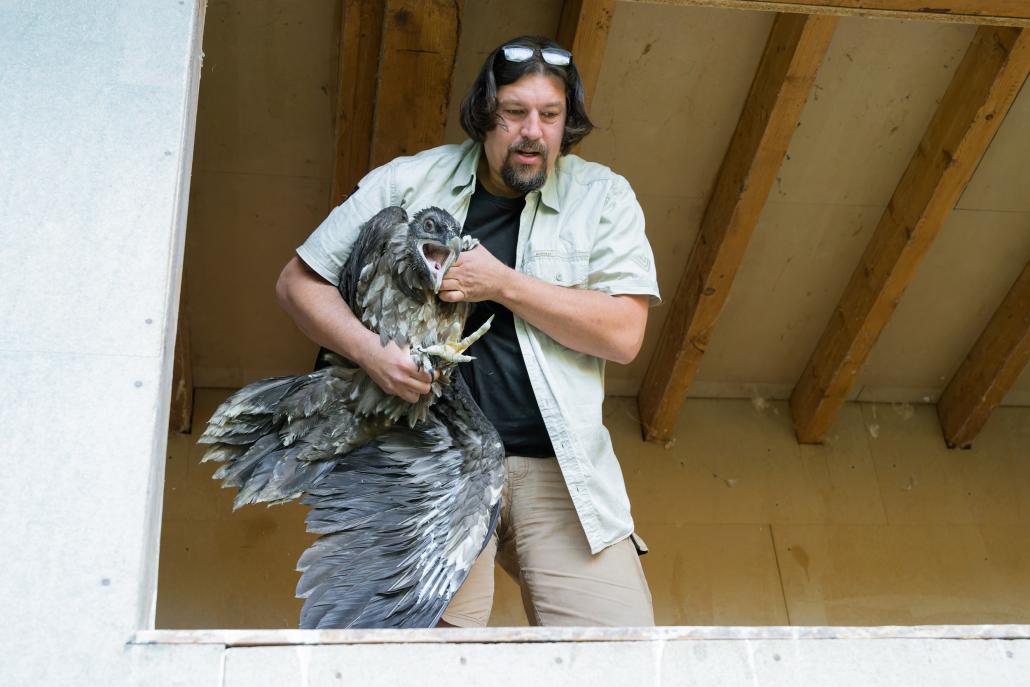
„The bearded vulture was the first species of raptor to be released into the wild from Prague Zoo in 2000,“ says the curator of birds at Prague Zoo, Antonín Vaidl. According to him, most of the bearded vultures raised here, including chicks from other zoos that were fostered by Prague's bearded vultures as adoptive parents, have strengthened the wild population.
„We have been waiting for a chick for twenty years. The pause was due to the search for a new breeding pair, which finally proved successful this year. The wait was worth it, and the cherry on top is that the genetically valuable chick is already preparing for life in the wild at just three months old,“ adds Vaidl.
The little female hatched at Prague Zoo on March 1 and weighed 133 grams. She grew up in the background of the zoo. After initial supplementary feeding by the keepers, the care was completely taken over by the parent pair. When she set out on her life journey on May 26, she weighed about five kilograms and her wingspan had already reached two meters.
The chick first headed to a breeding station in Haringsee, Austria, with which Prague Zoo has been cooperating since 1990 for the exchange of individuals suitable for breeding and also in the transfer of birds for reintroduction. Only from there did she travel to the Guadalentín center in Spain, which specializes in the release of bearded vultures into the wild and raises the most chicks of this species in the world each year.
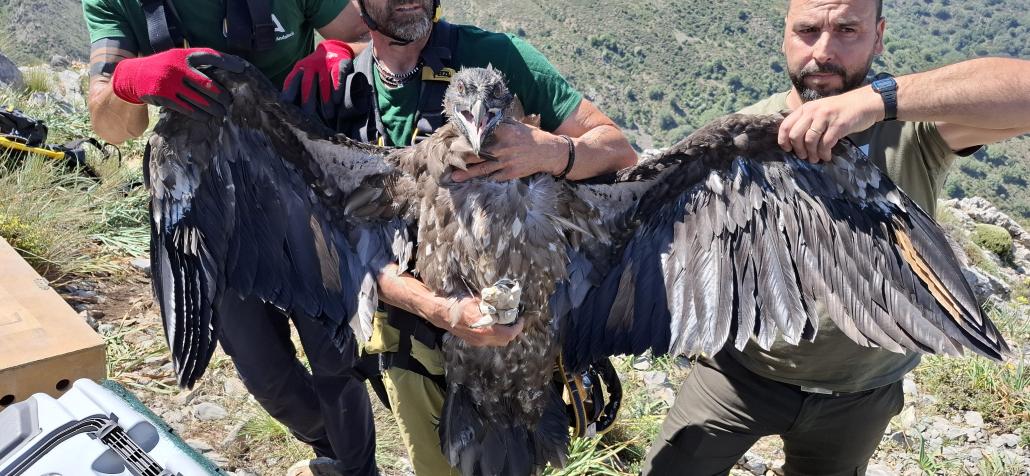
Spanish colleagues equipped the female with a GPS locator and lightened selected flight feathers with hydrogen peroxide. This will make her easily recognizable even among amateur observers, which will significantly contribute to the important monitoring of reintroduced birds. Subsequently, she was released into the wild along with two other chicks from breeding institutions in Austria and Spain using the artificial nest method (hacking site). This involves placing a nearly fledged chick on a rocky ledge, where it is subsequently fed by humans through an artificial tube, and after about two to three weeks, it flies off towards independence.
She was placed in such an artificial nest in the Sierra Nevada National Park on the border of the provinces of Granada and Almería on May 29. This increased the number of bearded vultures released in this location to nine. The total population in the national park is now estimated at twenty individuals.
These impressive raptors, known for their black beard, red-ringed eyes, and for consuming the bones of dead animals, have been kept by Prague Zoo since its inception. The first breeding, which was also the first in all of Czechoslovakia, was successful in 1989. Visitors can find bearded vultures in an aviary under the rocky massif between the enclosures of mouflons and ibexes.
Bearded vulture breeding at Prague Zoo in numbers:
12 own chicks hatched
10 own chicks raised
7 chicks raised under the Prague pair
3 chicks transferred to foster care at a breeding station in Austria
4 own chicks remained in human care
5 own chicks released into the wild
9 chicks hatched in other zoos were adopted by the Prague pair
8 adopted chicks raised
2 adopted chicks remained in breeding
6 adopted chicks released into the wild