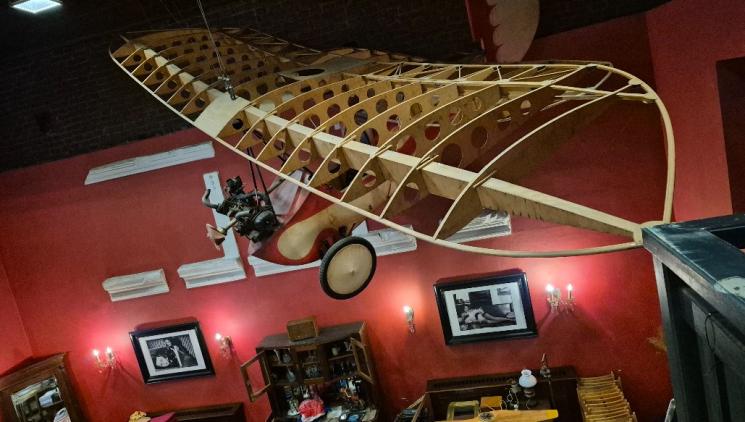

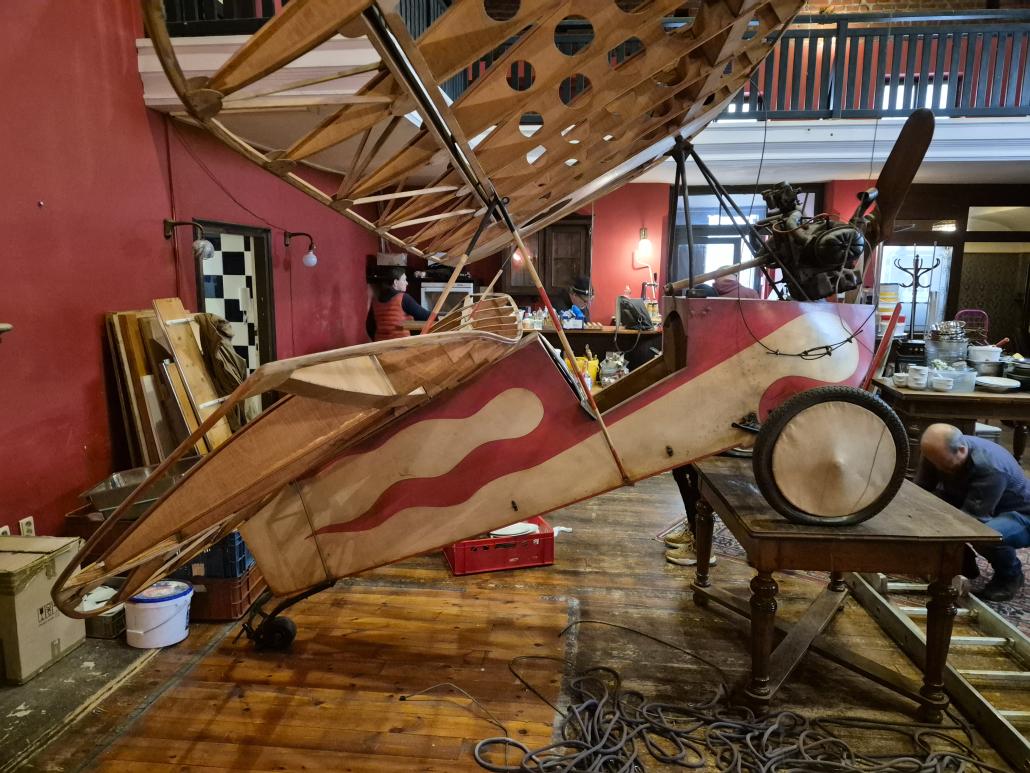
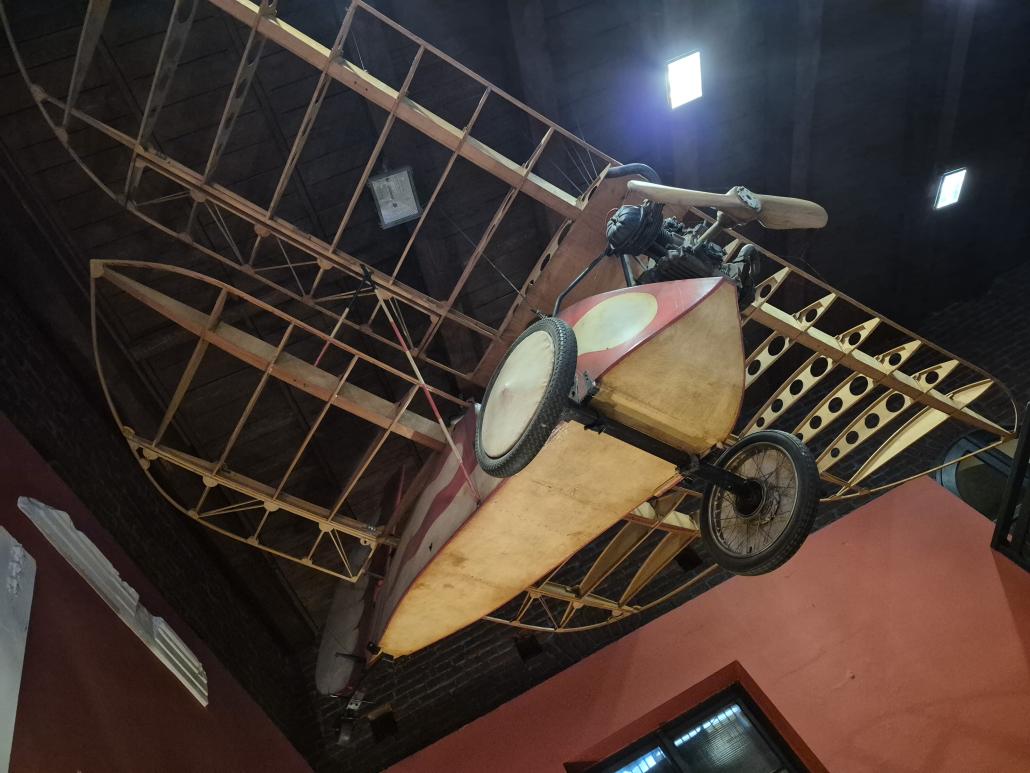
The museum curators brought the Heavenly Flea from the Avion Club in Prague, known for example from the show Na Plovárně, where it was almost a part of the interior decoration for three decades. "We thank Mr. Válek and Mrs. Štefanová very much, not only for the airplane itself but also for the great assistance during the disassembly," emphasized Hrabec.
According to him, with the acquisition of the Heavenly Flea, the Kunovice museum has joined the ranks of major world museums. "You can find various versions of the Heavenly Flea in the collections of the Military Historical Institute and the National Technical Museum, as well as in the Musée de l'air et de l'espace in France, the National Air and Space Museum in Washington, and the British Royal Air Force Museum, among many other prominent museums," he explained.
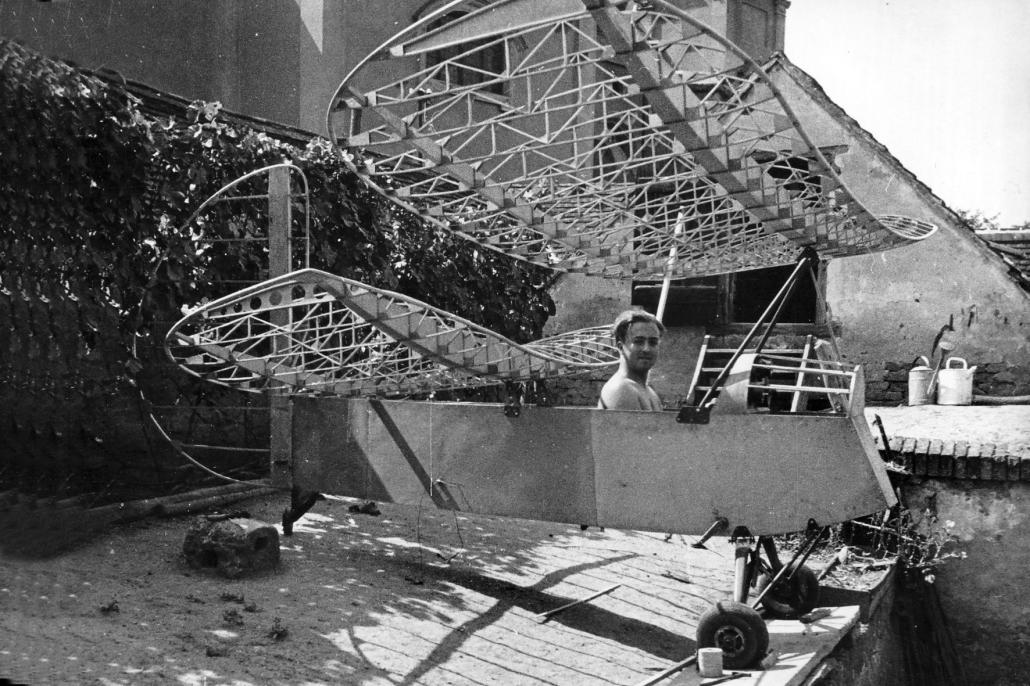
However, the airplane also has a direct connection to Kunovice. "After the war, Vladimir Janík, a former service technician and company photographer of Let Kunovice, who was the author of a number of iconic photographs of airplanes produced here, was building the Flea for himself," points out Lukáš Skládal, the secretary of the museum's historical commission. However, Janík never got to fly with his airplane. "After the communist coup in 1948, the state confiscated it just before completion, and it was most likely destroyed," he added.
It is likely that the Flea now acquired by the museum never flew either. "The second quarter of the 20th century, when people were building these airplanes, was not exactly a peaceful time. And it was by no means an easy project. So many of these machines ended up hidden somewhere in an attic, just like ours. On the other hand, thanks to that, it has been preserved," claims Hrabec. The airplane is temporarily headed to storage, but the curators want to display it in the coming years.
The Heavenly Flea was invented by the French aviation enthusiast Henri Mignet and was intended to serve the masses for recreational flying. Probably for this reason, it had simplified controls, which increased the stability of the machine but reduced its maneuverability. The first specimen took off in 1933. Mignet then shared his experiences in building the Flea in his book, which was published in Czechoslovakia in 1936 under the title "Aviation Sport – Why and How I Built the Heavenly Flea."